
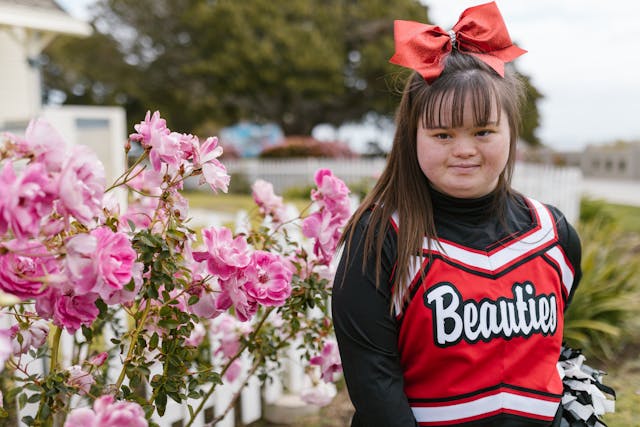
Down syndrome is one of the most recognised developmental disabilities in the world, yet many misconceptions still surround it. Too often, people with Down syndrome are viewed only through the lens of limitation, support needs, or stereotypes that fail to reflect the richness of who they are as individuals.
Inclusion begins with a simple but powerful idea: a diagnosis should never define a person’s value, potential, personality, or place in the world!
People with Down syndrome are not “inspirations” simply for existing, nor are they problems to be fixed. They are individuals with their own strengths, preferences, emotions, ambitions, and ways of experiencing life.
And like everyone else, they deserve environments where they are genuinely supported, respected, and included.
What is Down Syndrome?
Down syndrome is a genetic condition caused by the presence of an extra chromosome 21, which is why it is also sometimes referred to as Trisomy 21.
This additional genetic material can affect:
- physical development
- learning and cognitive processing
- communication
- motor skills
- health and medical needs
However, no two individuals with Down syndrome are exactly alike.
Some people may need significant support in daily life, while others live more independently, work, study, build relationships, and participate actively in their communities.
A diagnosis can provide information about support needs, but it cannot predict personality, capability, or quality of life.
Beyond the Stereotypes
One of the biggest barriers faced by people with Down syndrome is not the condition itself, but the assumptions society places on them.
Common stereotypes often portray people with Down syndrome as:
- permanently childlike
- incapable of independence
- universally “happy”
- unable to make decisions for themselves
These ideas are harmful because they erase individuality.
People with Down syndrome experience the full range of human emotions:
- joy
- frustration
- anxiety
- ambition
- sadness
- excitement
- determination
Like anyone else, they have unique personalities, interests, dislikes, talents, and goals.
Inclusion means seeing the person first — not the stereotype.
The Importance of Inclusive Education
Education plays a major role in shaping opportunity and self-confidence.
For many students with Down syndrome, inclusive education can provide:
- social connection
- communication development
- increased confidence
- exposure to diverse learning experiences
- stronger community participation
But inclusion is not simply placing a student in a mainstream classroom and expecting them to adapt without support.
Real inclusion requires:
- accessible teaching methods
- differentiated learning approaches
- patience and flexibility
- visual and practical supports
- collaboration between educators, families, and support staff
Inclusion works best when environments are designed with diversity in mind from the beginning.
Communication Looks Different for Everyone
Some individuals with Down syndrome may experience speech or language delays, but communication is far broader than spoken language alone.
Communication can include:
- gestures
- facial expressions
- visual supports
- assistive communication tools
- body language
- alternative forms of expression
One of the most important things adults can do is allow time.
Rushing communication, interrupting processing, or assuming lack of understanding can create frustration and exclusion.
Supportive communication means slowing down, listening carefully, and valuing all forms of expression.
Independence and Capability
There is often a tendency to underestimate people with Down syndrome, especially in education and employment settings.
Yet with appropriate support and opportunities, many individuals:
- work
- study
- develop strong social relationships
- advocate for themselves
- participate meaningfully in their communities
Independence does not mean doing everything alone. Every person relies on support in different ways throughout life.
True support is not about control — it is about creating opportunities for autonomy, dignity, and participation.
Why Representation Matters
Representation matters because visibility shapes expectations.
When people with Down syndrome are only represented through pity or limitation, society learns to see them as “less capable.”
But when representation includes:
- authentic voices
- education
- employment
- creativity
- leadership
- daily life experiences
we begin to build a more realistic and respectful understanding.
Inclusion is not just about access. It is about belonging.
Moving From Awareness to Action
Awareness campaigns are important, but awareness alone is not enough.
Real inclusion asks:
- Are environments accessible?
- Are expectations fair?
- Are people being listened to?
- Are opportunities truly available?
- Are differences respected rather than merely tolerated?
Support should never come at the cost of dignity.
People with Down syndrome should not have to constantly “prove” their worth in order to deserve inclusion, respect, or opportunity.
These should be basic human expectations.
Down syndrome is one part of a person’s identity, but it is never the whole story.
Behind every diagnosis is a human being with their own voice, personality, strengths, challenges, and dreams.
When society moves beyond stereotypes and deficit-based thinking, we stop focusing only on limitations and start creating environments where people can participate fully, meaningfully, and authentically.
Leave a Reply
You must be logged in to post a comment.