
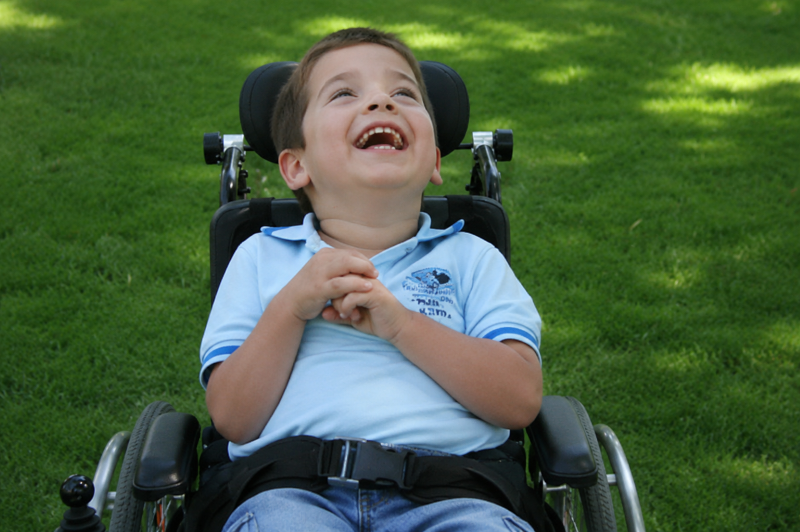
Spinal Muscular Atrophy is not a disease of muscles alone. The problem begins much higher in the body, inside the nervous system. Every movement we make depends on motor neurons — specialized nerve cells located in the spinal cord that act as electrical messengers between the brain and muscles. When a person wants to lift an arm, walk, breathe, or swallow, the brain sends instructions through these neurons. In SMA, this communication system gradually breaks down because motor neurons cannot survive normally.
The reason is genetic. Most cases of SMA are caused by mutations in the SMN1 gene, which produces survival motor neuron protein. Without enough SMN protein, motor neurons become damaged and eventually disappear. Once those connections are lost, muscles no longer receive the signals they need to function, leading to progressive weakness and muscle wasting.
The disease is rare, but its impact reaches every part of life.
The Many Faces of SMA
SMA is not one single condition. It exists across a spectrum.
Type 1 SMA, the most severe form, often appears during infancy. Babies may have difficulty controlling their heads, moving their limbs, swallowing, or breathing because respiratory muscles become weak.
Type 2 SMA usually appears during early childhood. Children may sit independently but often experience challenges with standing, walking, and maintaining muscle strength.
Type 3 SMA can appear later in childhood or adolescence. Many individuals learn to walk, although mobility may become more difficult over time.
Type 4 SMA, the adult-onset form, is generally milder and may appear in adulthood.
However, these categories do not tell the whole story. Two people with the same SMA type may have completely different abilities, needs, and life experiences.
The Challenges Beyond Muscle Weakness
The public image of SMA often focuses on mobility, but the condition affects much more than walking. Weak respiratory muscles can make breathing more difficult, increase the risk of infections, and require breathing support during sleep or throughout the day. Swallowing difficulties can affect nutrition and increase the risk of food entering the lungs. Some individuals need modified diets, feeding support, or specialized medical care. Fatigue is another invisible challenge. Tasks that appear simple — sitting upright for long periods, moving around a workplace, traveling, or attending school — may require significant energy and planning.
For families, SMA often means adapting daily routines around medical appointments, therapy sessions, equipment needs, and changing physical abilities.
Building Independence
Despite these challenges, many people with SMA develop highly effective ways to manage daily life. Mobility equipment plays a central role. Modern powered wheelchairs provide independence, allowing individuals to study, work, travel, and participate socially.
Technology has also transformed communication and accessibility. Voice-controlled devices, adapted computers, environmental controls, and smart-home systems allow people to control their surroundings and maintain autonomy.
For many people with SMA, independence is not about doing everything without assistance. It is about having the right tools, support systems, and freedom to make decisions about their own lives.
The Treatment Revolution
For decades, SMA treatment focused mainly on supportive care — helping people breathe better, maintain mobility, and manage complications. That changed dramatically with advances in genetic medicine.
Nusinersen (Spinraza)
Nusinersen was one of the first approved therapies designed to target the underlying biology of SMA. It works by modifying how the SMN2 gene produces SMN protein, helping the body create more functional protein to support motor neurons.
Gene Therapy (Onasemnogene Abeparvovec / Zolgensma)
Gene therapy introduced a completely different approach. Instead of modifying existing genes, it delivers a working copy of the SMN1 gene into cells using a viral delivery system. For eligible patients, especially when given early, gene therapy has shown the ability to significantly change disease progression.
Risdiplam (Evrysdi)
Risdiplam is an oral treatment that also targets SMN protein production through the SMN2 gene pathway, offering another treatment option for many individuals.
These therapies have changed SMA from a condition once associated with rapid decline into one where early diagnosis and intervention can dramatically improve outcomes.
The Importance of Early Diagnosis
Motor neurons lost because of SMA cannot simply be replaced. This is why timing matters. Newborn screening programs have become one of the most important developments in SMA care. Detecting the condition before symptoms appear allows treatment to begin during a critical window when more motor neurons are still healthy. For SMA, the difference between treatment before symptoms and treatment after significant weakness can be life-changing.
The Emotional Reality
Behind every medical statistic is a family navigating difficult decisions. Parents may face questions about treatments, future abilities, equipment, and long-term care. Adults with SMA may face barriers related to accessibility, employment, healthcare, and social inclusion. At the same time, many people with SMA describe lives filled with education, careers, friendships, relationships, creativity, and achievement. The challenge is not only treating the disease — it is building a world where people with SMA can fully participate.
The Future of SMA
The progress in SMA has been extraordinary, but important questions remain. Researchers are studying how to improve treatments, reach more affected tissues, understand long-term outcomes, and develop approaches that can restore or replace damaged motor neurons. Future possibilities include improved gene therapies, combination treatments, and regenerative approaches.
SMA has become one of the clearest examples of how understanding genetics can transform medicine. A condition once considered devastating and untreatable has become a model for what precision medicine can achieve.
Here are some people with SMA sharing their stories:



Leave a Reply
You must be logged in to post a comment.