
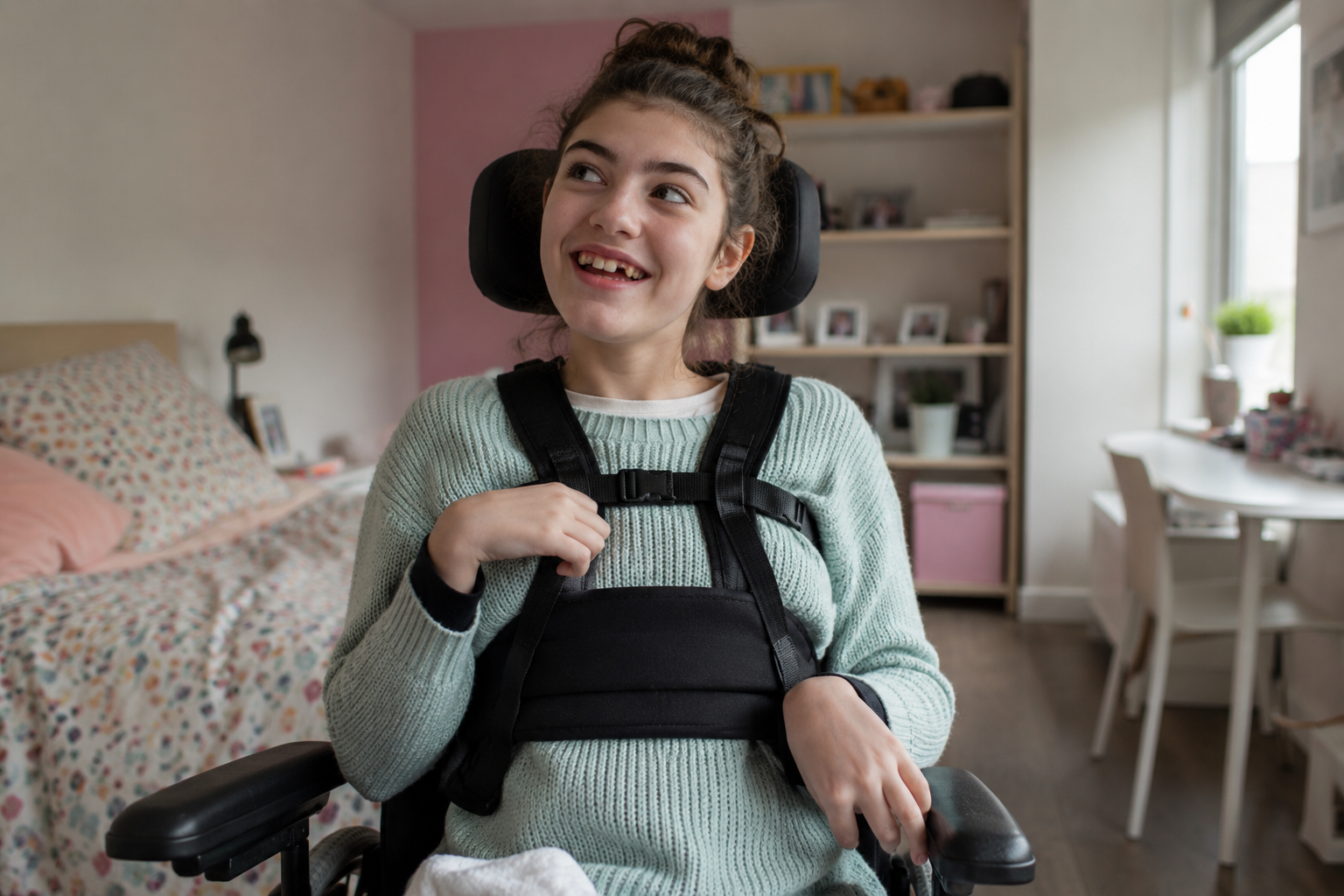
Cerebral palsy is not a single experience, nor is it a condition that can be neatly summarised through appearance or ability. It refers instead to a group of neurological disorders that affect movement, posture, and coordination, resulting from damage to the developing brain. This damage occurs before birth, during birth, or shortly after, and while the brain injury itself does not progress, its effects evolve over a lifetime.
The result is a condition that is often misunderstood—not because information is unavailable, but because the variability within cerebral palsy resists simple description.
A Condition Defined by Diversity
One of the most important features of cerebral palsy is the extent to which it varies from person to person. Some individuals experience mild motor difficulties that are barely noticeable in daily life. Others may require mobility aids or full-time assistance with physical tasks. Speech, vision, and coordination can be affected in different combinations, and additional conditions such as epilepsy or sensory impairments may be present in some cases but absent in others.
This variability is not incidental; it is central to the condition itself. Cerebral palsy is best understood not as a single clinical presentation, but as a spectrum of neurological impact arising from early brain injury.
Because of this, assumptions based on diagnosis alone are often unreliable. Two people with cerebral palsy may have entirely different functional abilities, educational experiences, and levels of independence.
Movement, Not Intelligence
A persistent misconception is that cerebral palsy affects intellectual ability. In reality, cerebral palsy primarily impacts motor function. Intelligence is not inherently affected by the condition.
Some individuals do experience co-occurring intellectual disabilities, but many do not. Educational attainment, employment, and cognitive ability vary widely across the population of people with cerebral palsy, just as they do in the general population.
Confusion often arises because communication differences, speech impairments, or motor limitations can be mistakenly interpreted as cognitive difficulty. This highlights a broader issue: disability is frequently misread through the lens of unfamiliarity rather than understood on its own terms.
The Stability of the Brain Injury
Unlike degenerative neurological conditions, cerebral palsy is non-progressive. The initial brain injury does not worsen over time. However, this does not mean the lived experience remains static.
As the body grows and ages, the physical demands placed on muscles and joints change. Some individuals may experience increased fatigue, stiffness, or pain in adulthood, particularly if mobility is affected. These changes are secondary effects rather than progression of the original neurological injury.
This distinction is important in both clinical understanding and public perception. Cerebral palsy is not a condition that “gets worse,” but it is one that interacts with the body across the lifespan in complex ways.
Daily Life and Functional Variation
The impact of cerebral palsy on daily life depends heavily on the individual. For some, the condition may require only minor adjustments in how tasks are performed. For others, it may involve structured support for mobility, communication, or personal care.
Assistive technology plays a significant role in shaping independence. Mobility aids, communication devices, adaptive software, and environmental controls have expanded opportunities for education, employment, and social participation. These tools do not change the underlying condition, but they can significantly reduce the barriers associated with it.
Importantly, independence in the context of cerebral palsy is not defined by the absence of support. Rather, it is shaped by the ability to make choices, participate in society, and access appropriate resources.
Early Development and Diagnosis
Cerebral palsy is typically diagnosed in early childhood, often after developmental differences in movement or muscle tone become noticeable. In some cases, diagnosis may follow early medical complications such as premature birth or lack of oxygen during delivery, though the exact cause is not always identifiable.
Early intervention can play a meaningful role in supporting development. Physiotherapy, occupational therapy, speech and language support, and educational planning may all be involved depending on individual needs. However, these interventions are not intended to “correct” cerebral palsy, but rather to support function, mobility, and communication.
Misconceptions and Social Understanding
Public understanding of cerebral palsy is still shaped by limited and often outdated representations. Visible mobility impairments are sometimes assumed to reflect overall disability, while speech differences may be incorrectly associated with cognitive ability. These assumptions can lead to underestimation, particularly in educational, workplace, and social settings.
At the same time, it is equally important to avoid a simplified narrative of overcoming or inspiration. People with cerebral palsy are not defined by their condition in either direction—neither by limitation nor by exceptionalism. Most lives exist in a space of ordinary complexity, shaped by both challenge and capability.
Support, Access, and Environment
The experience of cerebral palsy is not determined solely by neurological factors. Environmental design, social attitudes, and access to support services all play significant roles in shaping quality of life.
Accessible infrastructure, inclusive education systems, and responsive healthcare services can reduce barriers significantly. Conversely, lack of access can amplify difficulties that are not inherent to the condition itself but arise from external constraints.
This distinction is central to modern disability understanding: disability is not only located within the individual, but also produced through the interaction between a person and their environment.
Cerebral palsy cannot be reduced to a single narrative or visual stereotype. It is a lifelong neurological condition marked by diversity in presentation and experience. While it affects movement and posture in consistent ways at a medical level, its impact on daily life varies widely depending on the individual and their circumstances. A clearer understanding of cerebral palsy requires moving beyond assumptions—about ability, intelligence, independence, and support. When these assumptions are replaced with observation, context, and respect, a more accurate and humane understanding becomes possible.


Leave a Reply
You must be logged in to post a comment.