
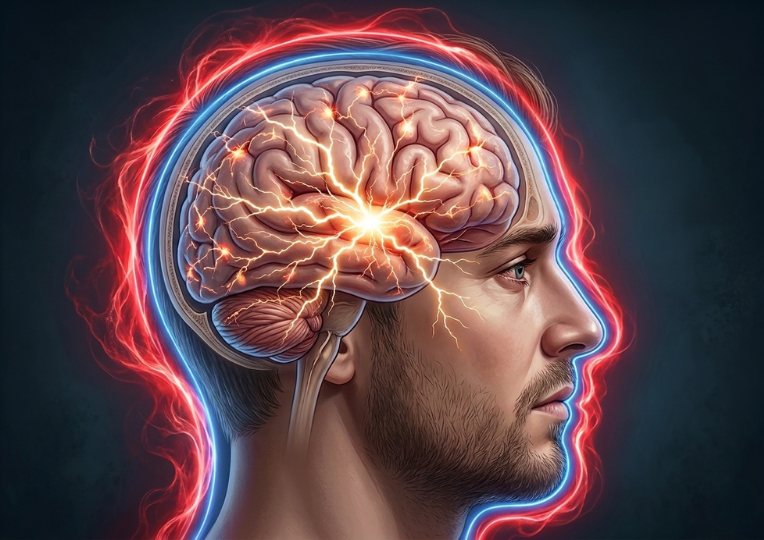
Epilepsy is a neurological (not neurodevelopmental) condition characterized by recurrent, unprovoked seizures caused by sudden bursts of electrical activity in the brain. It affects people of all ages and backgrounds, and its presentation can vary widely—from brief lapses in awareness to full-body convulsions.
Despite being one of the most common neurological conditions worldwide, epilepsy is still widely misunderstood.
What Happens in the Brain?
The brain relies on finely tuned electrical signals to regulate movement, thought, sensation, and behavior. In epilepsy, this electrical balance becomes disrupted. When groups of neurons fire abnormally and synchronously, a seizure occurs.
Seizures are not all the same. They can be:
- Focal seizures, affecting one part of the brain
- Generalized seizures, involving both hemispheres
- Absence seizures, often appearing as brief “staring spells”
Causes and Triggers
Epilepsy can arise from many different factors, including:
- genetic predisposition
- brain injury or trauma
- infections affecting the brain
- developmental brain differences
- unknown (“idiopathic”) causes
Common seizure triggers may include:
- sleep deprivation
- stress
- flashing lights (in some individuals)
- hormonal changes
- alcohol or medication interactions
Living With Epilepsy
For many people, epilepsy is not just a medical condition—it is a daily management experience. Even when seizures are controlled with medication or other treatments, the condition can influence:
- work and education planning
- driving eligibility
- mental health and anxiety levels
- social stigma and disclosure decisions
Modern treatment options include anti-seizure medications, dietary therapies (such as ketogenic approaches), and in some cases, surgery or neurostimulation devices.
Why It Still Relates to Neurodivergence Discussions
Even though epilepsy is not classified as neurodivergence, it is sometimes discussed in similar contexts because it affects how the brain functions in everyday life.
This includes:
- changes in awareness or perception during seizures
- cognitive effects such as fatigue or confusion afterward
- the unpredictability of symptoms
- the need for accessibility and accommodations in daily life
These overlaps in lived experience are why epilepsy may appear in broader conversations about neurodiversity, even though its medical classification is different.
What to Do During an Epileptic Episode
If someone experiences a seizure, the priority is safety and allowing the episode to pass without interference.
For most seizures:
- Stay calm and time the episode if possible
- Gently protect the person from injury (move nearby objects if needed)
- Do not restrain their movements
- Do not put anything in their mouth
- Place them on their side once the convulsive phase has passed, if possible
- Stay with them until full awareness returns
Call emergency services if:
- the seizure lasts longer than 5 minutes
- another seizure follows immediately
- the person is injured, pregnant, or has difficulty breathing
- it is their first known seizure
Afterward, confusion, fatigue, or disorientation is common and may take time to resolve.
Improving awareness of seizure response contributes to safer environments in schools, workplaces, and public spaces, reducing risk and unnecessary fear when episodes occur.


Leave a Reply
You must be logged in to post a comment.